Car people don’t decorate like everyone else. A normal living room gets “generic art.” A car lover’s space gets a story: the first classic you restored, the dream supercar you never forgot, the track day that changed your brain chemistry, the era of design you can’t stop obsessing over.
In 2026, automotive wall art is evolving fast. The big shift isn’t just “new poster styles.” It’s the way people buy, create, and display car art—especially with AI-assisted design workflows and a new wave of glare-free ePaper art frames that look more like real prints than a TV.
This guide breaks down the biggest automotive wall art trends 2026 is shaping right now, plus how to pick the right direction for your garage, office, studio, or collector wall.
Trend #1: AI-assisted automotive art is now a mainstream workflow
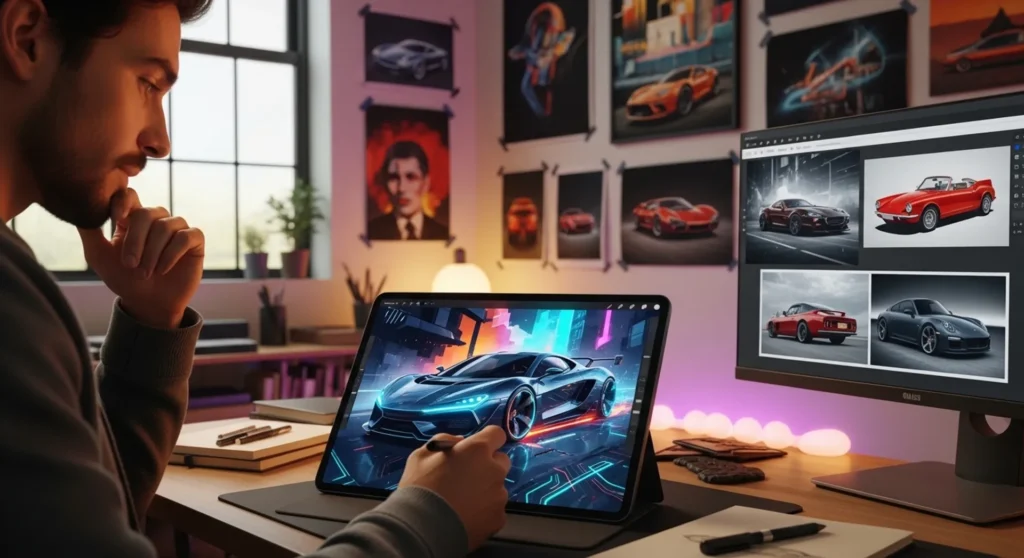
AI didn’t replace automotive artists. It changed the creative pipeline. Instead of staring at a blank canvas, artists can now generate concepts, lighting ideas, color palettes, and compositions in minutes—then refine them into a personal style.
On Bob’s Automotive Art, you’ve already covered how AI is influencing automotive imagery and concept aesthetics. If you want the deeper breakdown of tools, ethics, and what AI is best at (and what it isn’t), this internal post is the perfect companion:
What’s trending within AI car art in 2026:
- Retro-future blends: classic silhouettes with modern aero and cyber lighting
- “Blueprint” and technical poster looks: schematic lines, labels, measurements
- Limited palette prints: 2–4 colors, bold contrast, clean shapes
- Personalized AI mockups: customers want their exact car in a poster style
The practical takeaway: AI is the new sketchbook. The final piece still wins (or fails) based on taste, composition, and finishing.
Trend #2: Minimalist car posters keep dominating (because they actually fit modern rooms)
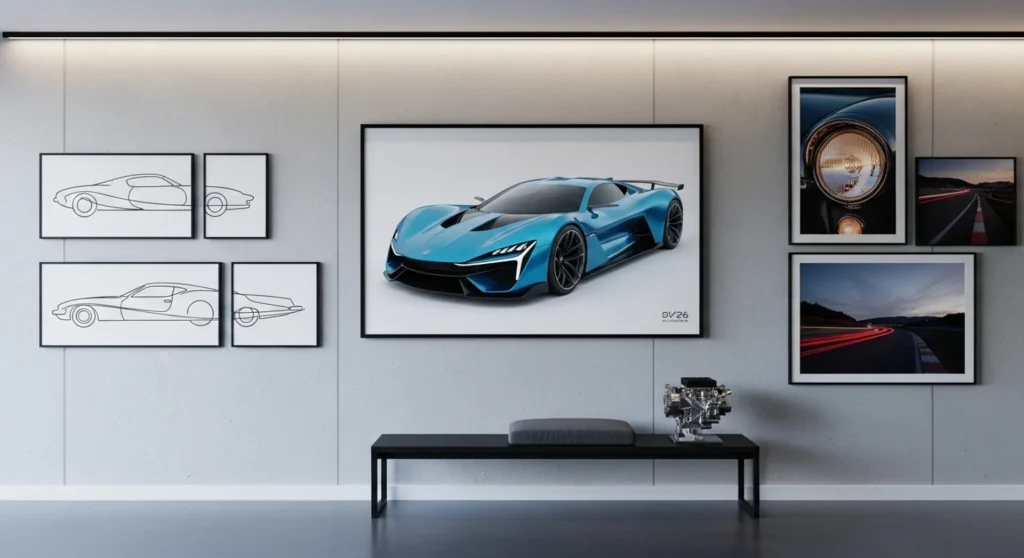
Minimalist car posters have staying power because they work in real spaces. A hyper-detailed photo print can fight the room. A clean silhouette or “solid style” poster supports the room and still communicates identity.
That’s why minimalist automotive art is showing up everywhere in 2026—home offices, garages, man caves, studios, even clean Scandinavian interiors. The best designs don’t try to show every bolt. They capture the car’s signature shape and attitude.
How to pick a minimalist poster that doesn’t feel generic:
- Choose an iconic angle (front 3/4, side profile, or rear stance)
- Pick a single “hero detail” (headlight, wing, wheel arch, grille)
- Match the palette to your space (black/white, muted tones, or one bold accent)
If your style leans classic, use older design language for inspiration. This post is a good internal bridge between car culture and art direction:
Trend #3: ePaper “digital posters” are changing how collectors display car art
This is the most interesting shift of 2026: large-format ePaper art frames that behave like a poster, not a glowing screen.
At CES 2026, InkPoster unveiled A1-sized color ePaper displays (including the Pininfarina-designed Duna). The whole point is “art-first” display: no glare, no backlight, and the image can remain visible even without power—closer to a print than a TV. These devices are being framed and installed like wall art, which opens a new door for collectors who want to rotate pieces without changing frames.
Credible coverage and product reporting on these A1 ePaper frames includes The Verge and Engadget, plus Forbes and InkPoster’s own CES announcements:
Why ePaper matters for automotive art specifically:
- Garage lighting: glare is the enemy; ePaper is built to reduce it
- Collection rotation: display different cars or eras without swapping frames
- Series storytelling: rotate a “timeline wall” (muscle era → JDM era → supercar era)
- Limited editions: digital certificates + rotating collections become more practical
Realistically, these frames are premium. But the trend is important: “how art lives on walls” is changing, and automotive collectors are early adopters.
Trend #4: Custom portraits are trending again (but with better taste)
Custom car portraits never died, but they’re getting cleaner. People are moving away from cluttered collages and leaning toward:
- one car, one clean background
- simple location hints (garage neon glow, track kerb colors, desert tones)
- subtle text (model, year, chassis code)
This trend pairs perfectly with your existing “custom art” content. If a visitor is considering commission-style work or personalization, these internal posts keep them engaged:
- The Art of Custom Car Portraits: Preserving Automotive Legends on Canvas
- How to Start Your Own Automotive Art Collection on a Budget
Trend #5: “Process content” is now part of the product
People don’t just want the finished print. They want the story: sketches, layers, color choices, the reference photo, the evolution. This is massive on social platforms, and it also increases on-site time for blogs because readers love behind-the-scenes content.
Lean into this by linking your process breakdown whenever you publish a trend post (it boosts internal SEO and makes the brand feel real):
How to choose the right style for your space (quick decision guide)

If you’re shopping (or designing) automotive wall art in 2026, use the room’s function as your filter:
Garage / workshop
- Go bold: high contrast, big formats, hero silhouettes
- Try “series walls”: 3–6 prints in a consistent style
- Consider ePaper if glare is a constant problem
Home office
- Minimalist posters work best (clean and calm)
- One statement piece > many small random prints
- Match palette to your desk setup (black/white, neutrals, or one accent color)
Collector wall / studio
- Mix eras with intention (muscle + JDM + supercar) but keep a consistent layout
- Use captions sparingly (model/year/chassis code only)
- Rotate seasonal themes (track season, vintage summer, motorsport winter)
Where automotive wall art trends go next
Looking forward, three directions are obvious:
- More hybrid art: AI concept → human finishing → print-ready mastery
- Better display tech: ePaper gets larger, faster, and more accessible
- More personalization: people want their exact build, not a stock photo
If you want your own “next step” content plan, a strong follow-up post would be: “How to build a 3-print automotive wall set (perfect layout + sizes + themes).” That’s high-intent, easy to shop, and naturally links to your gallery and collecting content.
Final thoughts
Automotive wall art trends 2026 isn’t about one style winning. It’s about car art becoming more personal, more display-friendly, and more flexible. Minimalist posters keep dominating because they work in modern rooms. AI keeps accelerating new visual directions. And ePaper frames are introducing an “art poster” future where collectors can rotate pieces without swapping physical prints.
Pick the trend that matches your space and your personality—and then commit to a consistent look. That’s what turns “decor” into a real automotive art wall.