
Automotive art has a rich history rooted in the deep connection between car culture and artistic expression. From the early days of automotive design to the rise of digital art, the way we portray vehicles has evolved dramatically. Over the years, automotive art has moved from traditional hand-painted works to cutting-edge digital designs, reflecting not only advancements in technology but also the ever-changing cultural landscape surrounding automobiles. In this blog post, we’ll explore the journey of automotive art, the impact of technology, and how digital tools are shaping the future of car culture.
From Hand-Painted Masterpieces to Digital Designs
 Automotive art initially emerged as a way to celebrate the beauty, speed, and power of cars, particularly the iconic vehicles of the 20th century. In the early days, car enthusiasts and manufacturers turned to hand-painted artwork to capture the essence of classic cars. These works were not only visual representations of the vehicles but also reflections of the culture, values, and personalities associated with them.
The first automotive artists used traditional mediums, such as oil paints, to create detailed and realistic depictions of cars. The art captured the curves of the fenders, the shine of the chrome, and the unique details of each car model. These artworks were often commissioned by car manufacturers, racing teams, or even collectors who wanted a permanent, artistic representation of their prized vehicles.
As the automotive industry grew and car culture flourished, so did the demand for artistic representations of vehicles. It wasn’t just about creating a beautiful image—it was about expressing the power, the speed, and the emotion that each car evoked. While hand-painted automotive art is still revered, the rise of technology has opened up new avenues for artistic expression.
The Digital Revolution: A New Era of Automotive Art
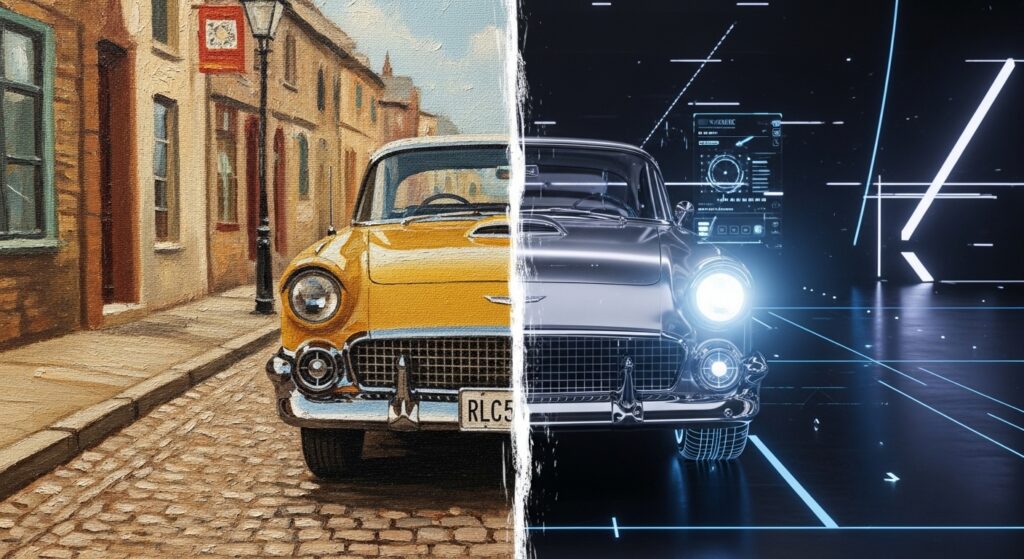
With the advent of digital technology, the world of automotive art underwent a dramatic shift. Artists now have access to powerful digital tools such as Adobe Photoshop, Illustrator, and 3D rendering software, which have revolutionized the way automotive art is created. These tools provide artists with a level of precision, flexibility, and creativity that was previously impossible with traditional mediums.
One of the most significant changes in automotive art came with the introduction of digital illustration. Artists could now create highly detailed and accurate representations of cars, experimenting with lighting, angles, and textures in ways that weren’t feasible with paint and canvas. This allowed for an even more dynamic and hyper-realistic approach to automotive art.
Moreover, digital art opens up new possibilities for interactive designs. Car manufacturers and artists are now using digital technologies like 3D modeling and augmented reality (AR) to create immersive automotive experiences. These technologies allow for digital renderings of cars that can be manipulated in real-time, offering a unique perspective on a car’s design that a static painting simply can’t match.
Technology and the Modern Automotive Artist
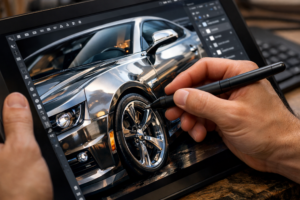 Today’s automotive artists have a wealth of tools at their disposal, enabling them to push the boundaries of what’s possible in the world of car art. Digital tools like tablets and styluses allow artists to work more efficiently, creating intricate details and effects that mimic real-world textures, such as chrome, metal, and glass. These digital paintings are often so realistic that it’s hard to tell them apart from traditional paintings at first glance.
One of the most exciting advancements in automotive art is the rise of 3D design. With 3D modeling software, artists can create automotive art that is not only visually captivating but also dynamic and interactive. For example, car designers can now create 3D renderings of vehicles and animate them, giving viewers a chance to see the car in motion, highlighting its design and functionality from every angle.
Another key development in the digital age is the use of artificial intelligence (AI) in creating automotive art. AI-powered software can analyze and replicate the styles of well-known artists, allowing digital platforms to generate car art that emulates specific artistic movements. This has led to the rise of AI-generated car art, a new genre that blends machine learning with human creativity.
Futuristic Automotive Art: What Lies Ahead
The future of automotive art seems limitless as technology continues to evolve. Artists are already exploring ways to merge physical and digital mediums, creating hybrid works that combine traditional painting techniques with digital enhancements. For example, an artist might begin a painting with traditional brushes and then scan it into a digital program to add layers of detail, texture, and lighting effects.
Looking ahead, augmented reality (AR) and virtual reality (VR) are set to play a huge role in the future of automotive art. Imagine being able to view a car in your living room through AR or stepping into a virtual world where you can explore a digital car design from every angle. These technologies will bring a whole new level of interactivity and engagement to automotive artwork.
Additionally, as electric vehicles (EVs) and autonomous cars become more prevalent, automotive art will likely adapt to reflect the new automotive landscape. Artists will find creative ways to represent the future of transportation, blending futuristic designs with their artistic interpretations of EVs and self-driving cars. This will likely lead to new and innovative styles of automotive art that capture the spirit of innovation, sustainability, and the ever-changing nature of the automotive world.
Why Automotive Art Matters
Automotive art is more than just decoration—it’s a reflection of our love for cars and the culture that surrounds them. Cars are not just machines; they are symbols of freedom, speed, and innovation. Whether it’s a classic muscle car or a futuristic electric vehicle, automotive art allows us to celebrate the designs, technology, and stories behind these machines.
For car enthusiasts, owning a piece of automotive art is a way to connect with the vehicles they love. It’s a way to preserve the legacy of classic cars and embrace the cutting-edge designs of modern vehicles. As automotive art continues to evolve, it will undoubtedly remain a vital part of car culture, celebrating the beauty, engineering, and artistry that go into every car on the road.
Interested in adding automotive art to your collection? Visit our automotive art collection to explore unique pieces that capture the essence of car culture. Whether you’re a collector or just someone who appreciates the beauty of cars, there’s an artwork that speaks to you.
For more insights into automotive art, explore this article on Autobest Automotive Art.