
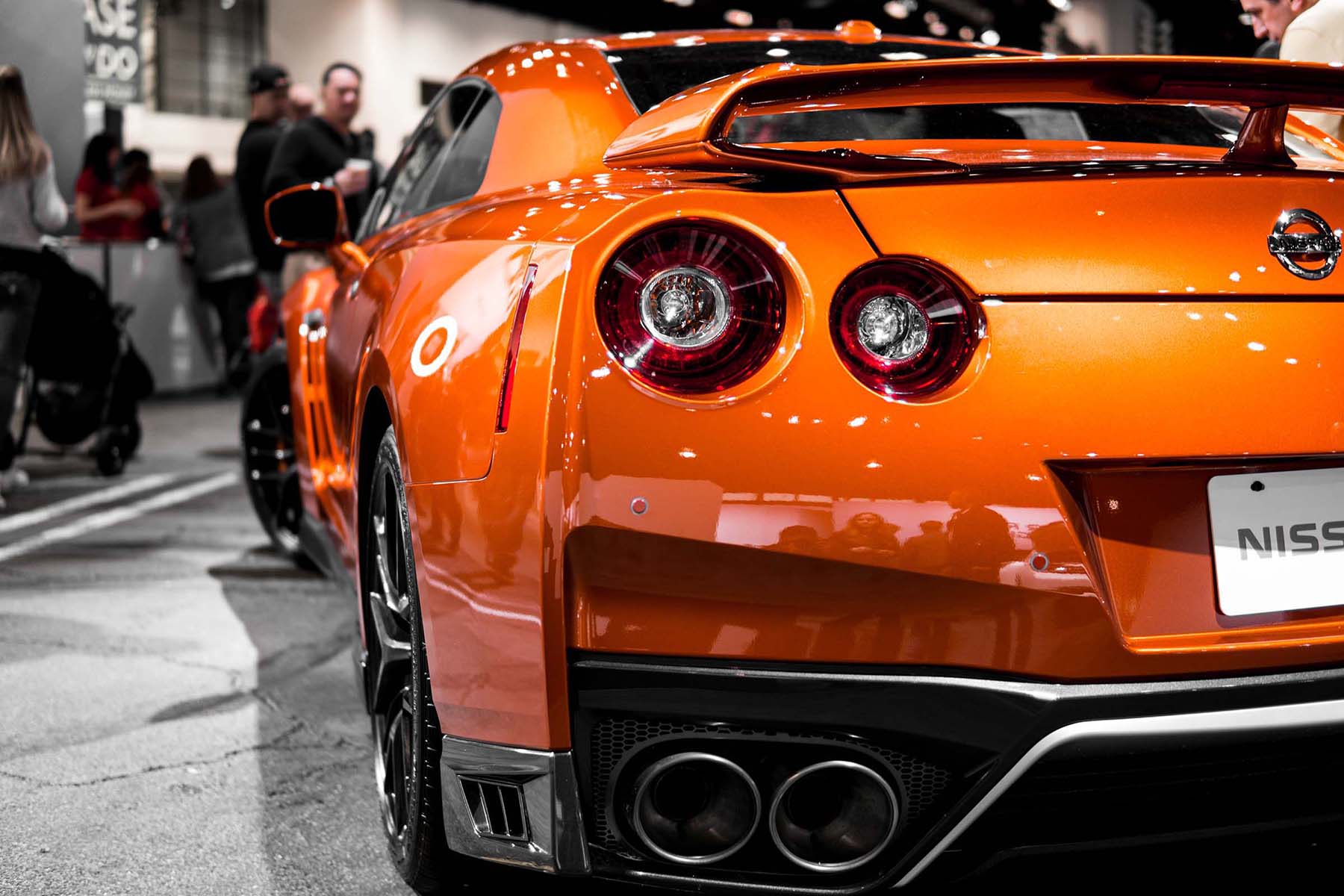
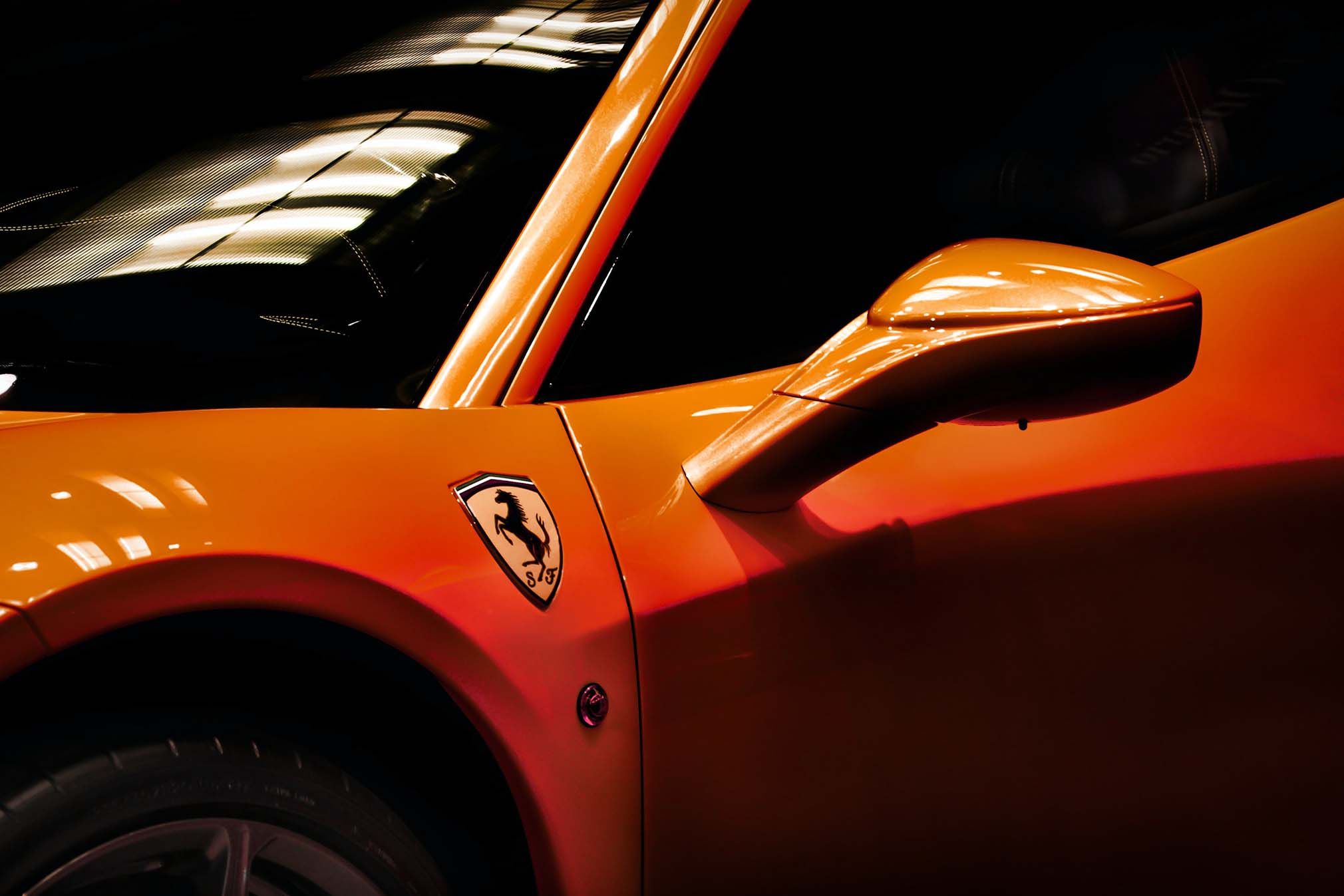
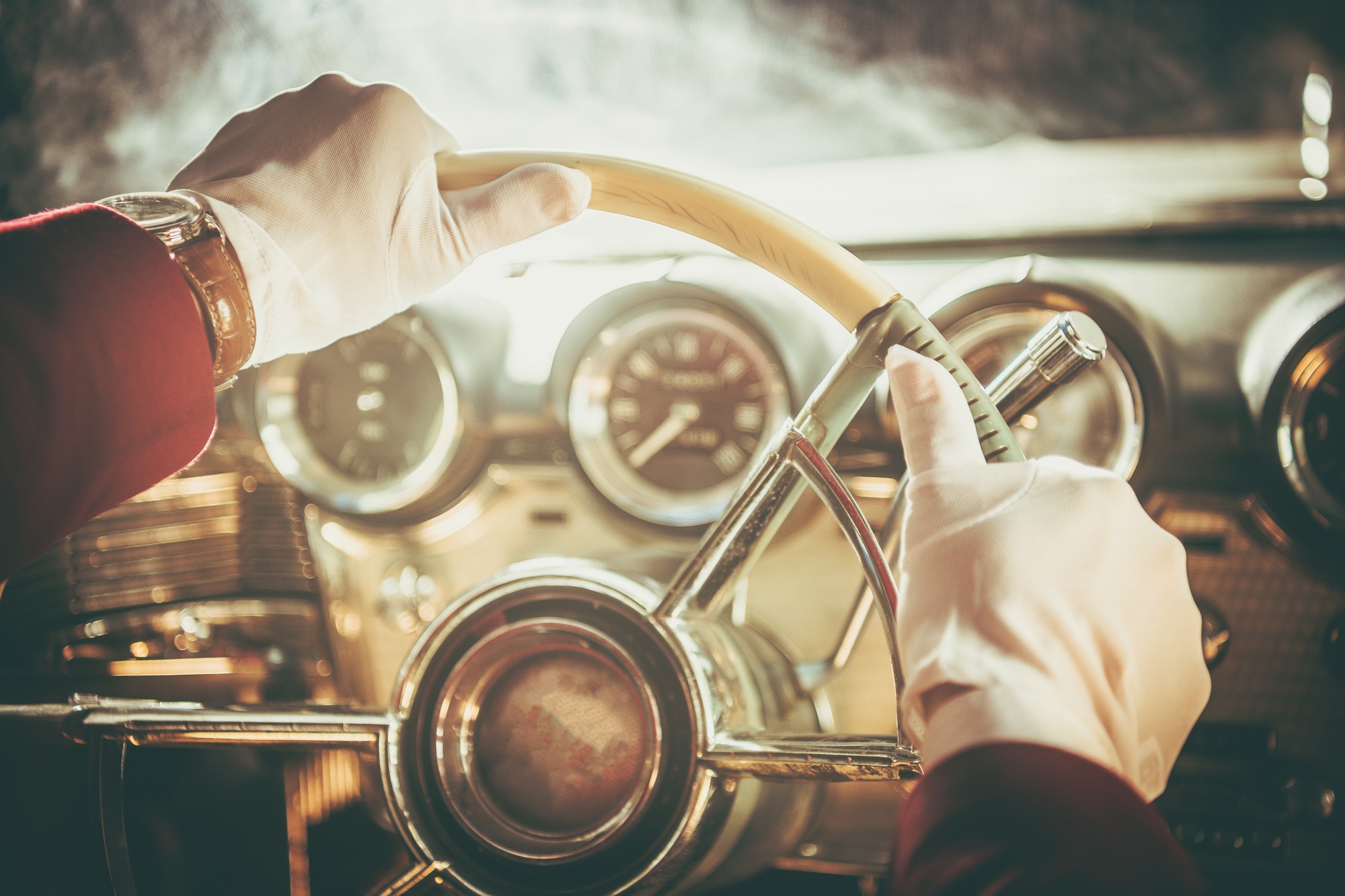
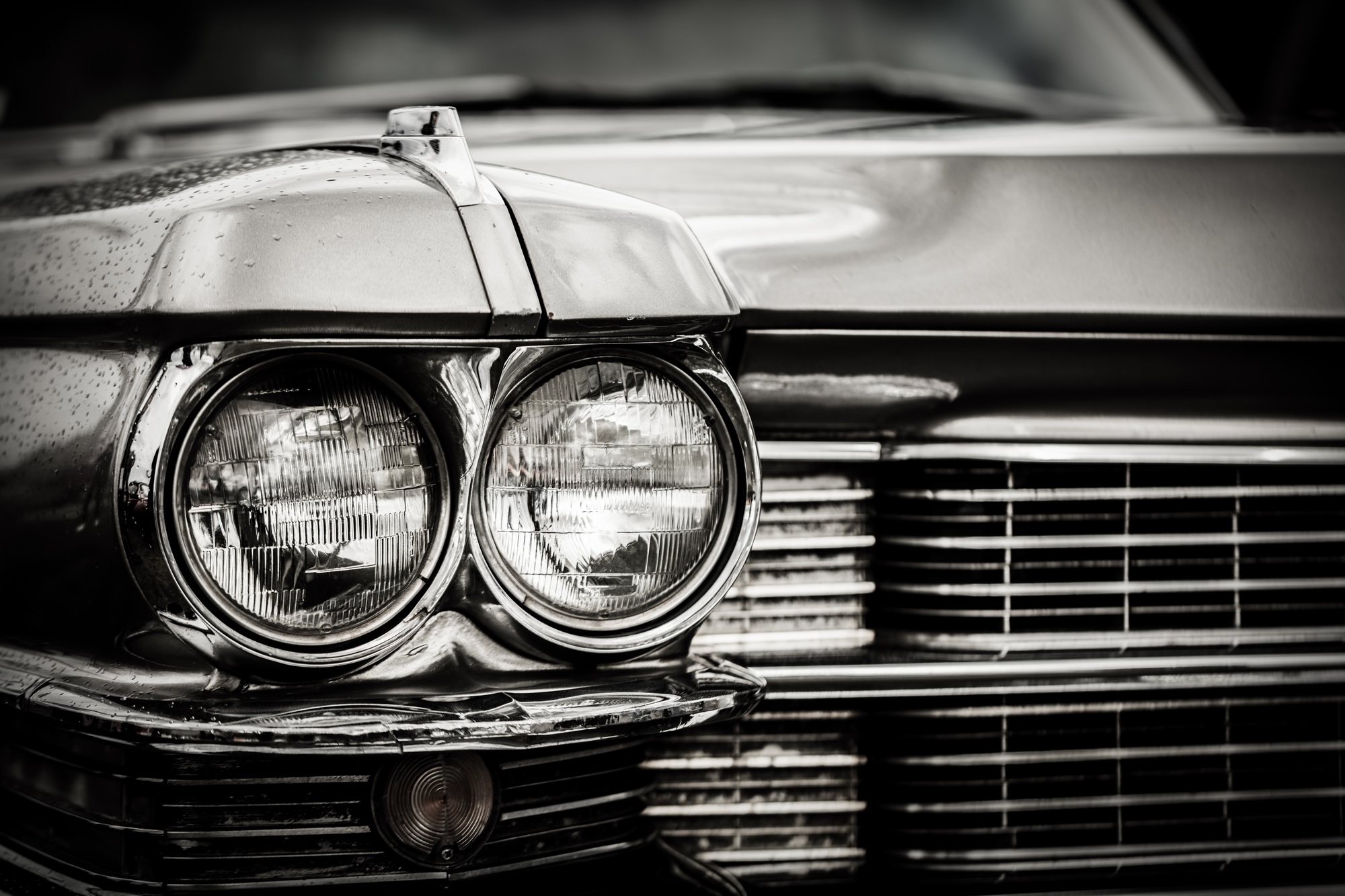
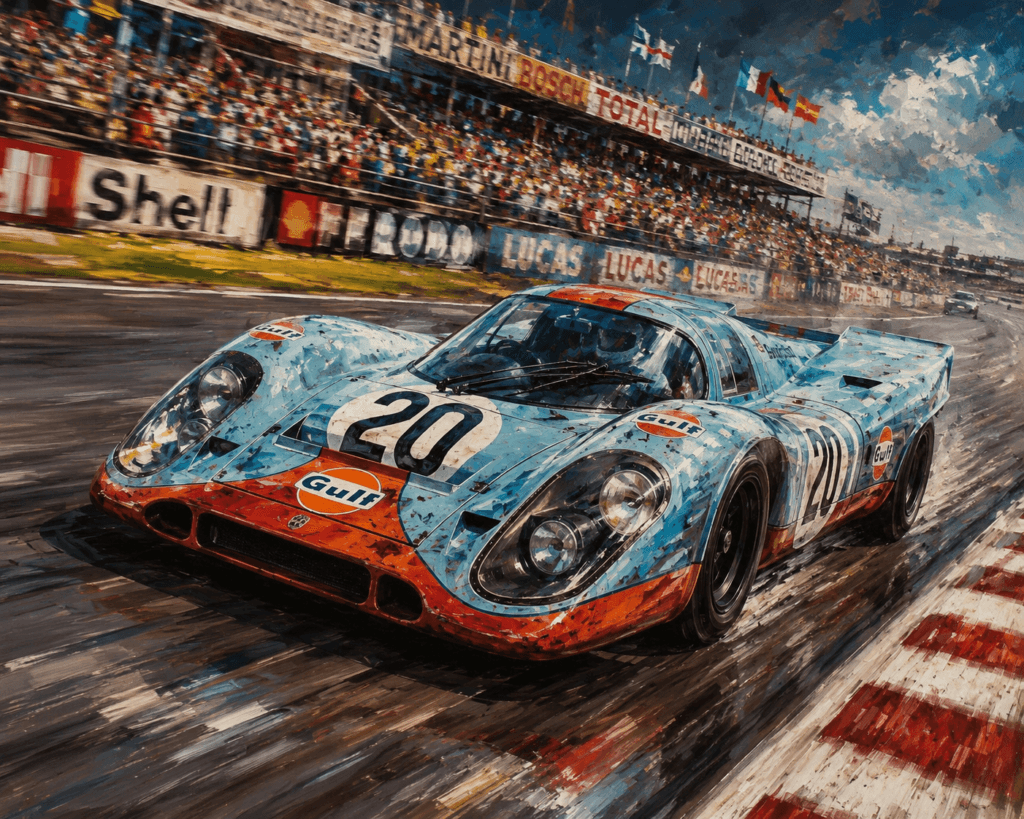
Motorsports automotive art captures the energy, speed, color, and emotion of racing culture. From vintage race posters to modern digital car illustrations, racing has shaped the way artists portray movement, performance, and vehicle design. For car lovers, this style of artwork does more than decorate a wall. It preserves the feeling of the track, the sound of engines, and the visual identity of legendary race cars.
Racing has always been connected to visual storytelling. Every track, livery, driver number, and grandstand scene adds character to the artwork. A race car is not only a machine built for speed. It is also a symbol of competition, engineering, and passion. That is why motorsports continues to inspire artists, collectors, and automotive enthusiasts across generations.
Why Racing Has Always Inspired Automotive Artists
Racing is naturally dramatic. Fast cars, sharp turns, glowing headlights, tire smoke, and packed grandstands all create scenes that feel ready for canvas. Automotive artists often turn to motorsports because it gives them a strong story to tell. A race car leaning into a corner can feel alive, even in a still image.
This is one reason motorsports remains closely connected to automotive art and car culture. Racing artwork can show motion, tension, and excitement in a way that standard car portraits often cannot. A parked classic car can look beautiful, but a race car at full speed can feel powerful and emotional.
Artists use several techniques to make racing scenes feel active. They may angle the car across the frame, blur the background, add track spray, or show tire marks behind the vehicle. These details help the viewer feel the intensity of the moment.
The Power Of Race Car Liveries
 One of the most recognizable parts of motorsports art is the racing livery. A livery includes the colors, numbers, graphics, and design patterns on a race car. In motorsports, liveries are both practical and artistic. They help fans identify a car quickly, while also giving each vehicle a unique visual identity.
Some racing liveries become as memorable as the cars themselves. Bright stripes, bold numbers, and high contrast color blocking create a strong impression. Automotive artists often recreate these details because they connect viewers to a specific racing era, team, or event.
For collectors, livery-based artwork can feel nostalgic. It may remind them of a favorite race, a childhood poster, or a classic vehicle they admired for years. This makes motorsports art meaningful for people who value both design and history.
From Track Posters To Digital Racing Art
Motorsports art has changed over time. Early racing artwork often appeared in posters, magazines, event programs, and advertisements. These pieces used bold illustration styles to promote races and celebrate cars. Many vintage racing posters are still admired today because they combine graphic design, typography, and automotive passion.
Modern artists now use digital tablets, 3D tools, and design software to create racing art with sharp detail and dramatic lighting. This connects naturally with newer trends in AI-generated car art and digital automotive illustration. Digital tools allow artists to experiment with reflections, speed effects, and cinematic angles while keeping the emotional feel of traditional artwork.
Racing art also fits well with modern collector spaces. A clean digital print of a race car can work in a garage, office, studio, or home theater. Some collectors prefer vintage-inspired poster styles, while others like realistic digital renders that show every detail of the vehicle.
Racing History As A Creative Foundation
Motorsports history gives artists a deep source of inspiration. Iconic tracks, famous race cars, and major racing traditions continue to influence automotive art. Museums such as the Indianapolis Motor Speedway Museum help preserve racing heritage, while the Petersen Automotive Museum showcases important vehicles and design stories from across car culture.
Racing organizations also shape the visual world that artists study. The FIA has long played a major role in international motorsport, while NASCAR history reflects the growth of stock car racing and American racing culture.
When artists study racing history, they can create more meaningful work. They can choose the right track setting, paint scheme, wheel style, number placement, and mood. These details help turn a simple car image into a piece that feels connected to real racing tradition.
How Motorsports Art Captures Motion
Motion is one of the biggest challenges in automotive art. A painting or digital illustration does not move, but it can still suggest movement. Motorsports artists use visual cues to create this feeling.
They may show a car mid-corner with its suspension compressed. They may use blurred grandstands, glowing reflections, smoke, or wet track spray. These effects create the feeling that the viewer is standing near the track as the car passes by.
Lighting also plays a major role. Reflections on a race car body can make the artwork feel fast and intense. Wet pavement, sunset lighting, or night racing scenes can add even more drama. These choices help transform a vehicle image into a racing story.
Why Collectors Love Racing-Inspired Artwork
Motorsports automotive art appeals to collectors because it combines design, memory, and emotion. A racing print can represent a favorite driver, car, track, or era. It can also reflect the collector’s personal connection to speed and performance.
This type of artwork pairs well with other collector pieces. It can be displayed near die-cast cars, helmets, vintage signs, trophies, or garage memorabilia. For people building an automotive-themed space, racing art can become the visual centerpiece.
If you are new to collecting, you may also enjoy reading how to start your own automotive art collection on a budget. Racing prints can be a practical starting point because they are available in many styles, sizes, and price ranges.
Motorsports Art And Modern Car Design
Racing has always influenced vehicle design. Aerodynamic shapes, lightweight materials, aggressive bodywork, and performance details often appear first in motorsports before inspiring road cars. Automotive artists use these design cues to create powerful images that feel fast even when the car is standing still.
This connection can also be seen in modern customization trends. Paint schemes, stripes, wheel choices, and performance-inspired body kits often borrow ideas from racing. For more on personalization, visit The Art Of Automotive Customization.
Artists often highlight racing-inspired details because they make a vehicle look purposeful. A front splitter, rear wing, wide stance, or vented hood can add visual drama to a piece of automotive art. These elements tell the viewer that the car was designed for speed.
What Makes Great Motorsports Automotive Art
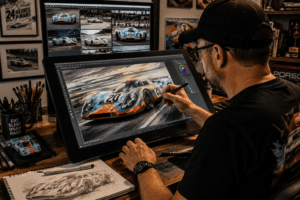 Great motorsports automotive art usually has three qualities. First, it captures the car accurately enough for enthusiasts to recognize the details. Second, it adds emotion through movement, color, and setting. Third, it tells a story that connects with racing culture.
A strong racing artwork does not need to show every detail perfectly. Sometimes, loose brushstrokes or dramatic lighting can create a stronger feeling than a perfectly polished image. The goal is to capture the spirit of the car and the race.
This is why many collectors enjoy both realistic and stylized racing art. Realistic pieces highlight the beauty of the machine. Stylized pieces capture the energy of the moment. Both approaches can work beautifully when the artist understands the culture behind the car.
How Motorsports Art Fits Into Automotive Decor
Motorsports art works especially well in spaces designed around passion and personality. Garages, offices, workshops, lounges, and man caves can all benefit from racing-inspired artwork. A bold race car print can instantly add movement and character to a room.
The style of the artwork can match the mood of the space. Vintage racing posters create a nostalgic look. Digital racing illustrations create a modern feel. Black and white track photography can add a clean and classic appearance. Large colorful prints can make the space feel energetic.
Motorsports art also connects well with other forms of automotive wall art. Collectors can mix racing prints with custom car portraits, classic car illustrations, and digital automotive designs to create a complete visual story.
Final Thoughts On Motorsports Automotive Art
Motorsports automotive art continues to grow because racing offers everything an artist needs: motion, color, history, personality, and emotion. From vintage posters to modern digital illustrations, racing-inspired art captures the thrill of the track and brings it into homes, garages, and collector spaces.
For car enthusiasts, motorsports art is more than decoration. It is a celebration of speed, design, and racing heritage. Whether the piece shows a classic endurance car, a stock car, an open-wheel racer, or a modern performance machine, it carries the spirit of competition.
As automotive art continues to evolve, racing may remain one of its strongest influences. The track gives artists a place to explore movement and drama. The cars give collectors a visual connection to history. Together, they keep motorsports culture alive through art.