


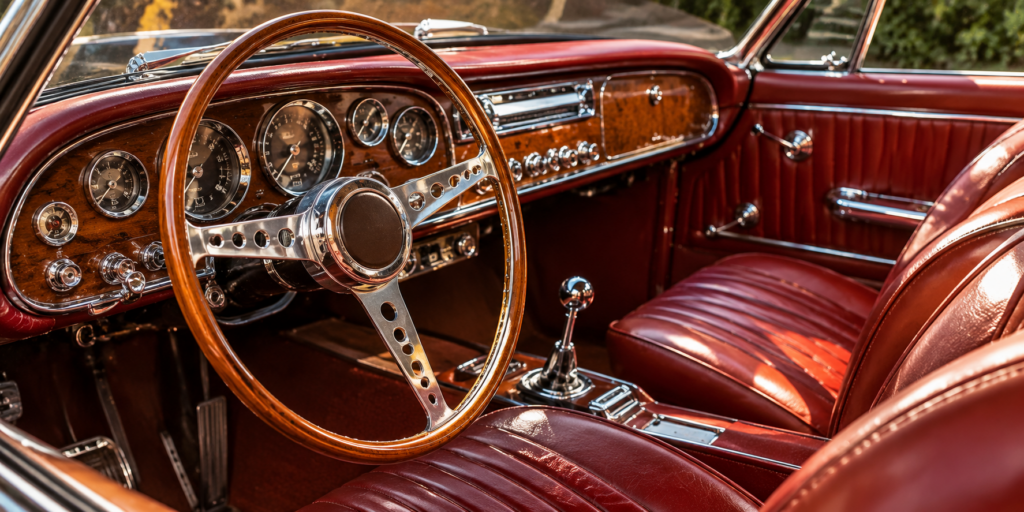
When people admire a beautiful automobile, attention often goes to the exterior. The body lines, wheels, grille, headlights, paint, and overall silhouette are easy to see from the outside. But there is another side of automotive design that deserves just as much attention: the interior.
Inside a car, designers work with dashboards, steering wheels, seats, door panels, gauges, switches, materials, colors, textures, and countless small details. These elements determine what drivers and passengers experience every time they enter the vehicle. In many classic automobiles, the interior can be just as visually impressive as the exterior.
Automotive interior design sits at the intersection of art, engineering, ergonomics, craftsmanship, and technology. It must look appealing while remaining functional and comfortable. This combination makes the automobile interior one of the most interesting areas of automotive design.
The Museum of Modern Art has documented the importance of interior design in automobile development. Its collection includes a General Motors design template called “Oscar,” which was used to help designers consider the human relationship with automobile interiors during the 1950s. The museum notes that interior design involved factors such as the position of the dashboard, steering wheel, and seats, along with ergonomics and human factors. Explore the historic GM interior design template at MoMA.
Why Automotive Interiors Deserve More Attention
 An automobile interior is a space people interact with directly. Unlike exterior styling, which is primarily experienced from the outside, the interior surrounds the occupants.
The steering wheel is held by the driver. The seat supports the body. The dashboard sits within the driver’s field of vision. Switches and controls need to be accessible. Materials are touched, seen, and sometimes heard as they move or operate.
This creates a unique design challenge. An interior has to communicate the personality of the vehicle while also supporting its practical purpose.
A luxury automobile might use soft leather, polished wood, metal trim, and carefully concealed technology. A performance car might emphasize supportive seats, simple controls, and a driver-focused layout. A vintage automobile may feature large analog gauges, thin steering wheels, chrome details, and materials that reflect its era.
The Interior Completes the Design Language
The strongest automotive designs create a relationship between exterior and interior. The shapes, colors, materials, and details found outside the vehicle can continue inside.
A vehicle with sharp exterior lines may use similarly geometric interior elements. A rounded classic car may feature curved gauges, circular controls, and flowing dashboard shapes.
This relationship helps the automobile feel like a complete design rather than a collection of unrelated components.
The Dashboard as a Piece of Design
The dashboard is one of the most visually important parts of an automobile interior. It combines instruments, controls, surfaces, materials, and technology into a single area directly in front of the occupants.
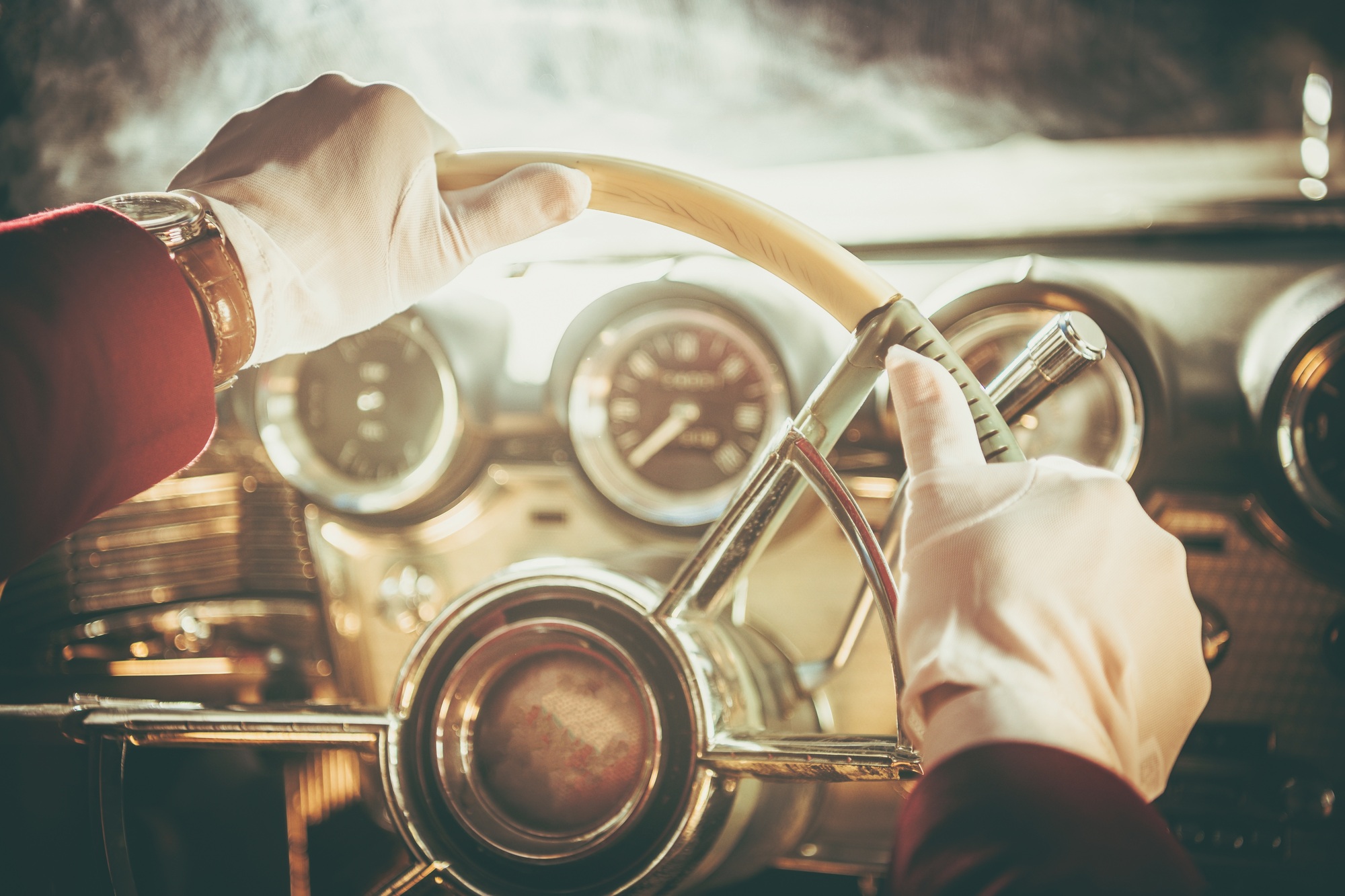
Historic dashboards can be particularly beautiful. Large circular gauges, chrome bezels, polished wood, painted metal, and carefully arranged switches can turn the instrument panel into a visual centerpiece.
The dashboard also shows how automotive design has changed over time. Earlier vehicles often relied heavily on analog instruments and physical controls. Modern vehicles increasingly incorporate digital displays, touchscreens, configurable interfaces, and electronic controls.
When Function Becomes Visual Style
One of the most fascinating aspects of dashboard design is how functional components can become decorative elements. A gauge has to communicate information, but its shape, markings, bezel, and placement can also contribute to the visual identity of the interior.
Knobs and switches can be designed to feel mechanical and substantial. Chrome trim can highlight particular areas. Wood or metal panels can create visual contrast.
Even a simple instrument cluster can become an important part of automotive art when photographed or illustrated carefully.
The Steering Wheel as an Automotive Design Icon
The steering wheel is another interior component that combines function and visual character. Because the driver interacts with it constantly, its shape and materials have a strong influence on the driving experience.
Classic steering wheels can feature thin rims, polished spokes, wood, leather, metal, or other decorative materials. Modern steering wheels often integrate buttons, paddles, sensors, and other controls.
From an artistic perspective, the steering wheel is an excellent example of how automotive design combines ergonomics with visual identity. Its proportions have to feel natural in the hands while also complementing the dashboard and seats.
A beautifully photographed steering wheel can communicate the character of an automobile without showing the entire vehicle.
Small Details Can Define an Interior
Automotive interiors are filled with small details that are easy to overlook. Door handles, stitching, vents, pedals, gear selectors, speaker grilles, switches, and trim pieces can all contribute to the overall design.
These details become particularly noticeable in high-quality automotive photography. Close-up images can reveal textures and craftsmanship that disappear when looking at the entire interior.
This connects with the approach explored in our article about automotive photography as visual storytelling. Just as a photographer can turn a badge or body panel into an artistic subject, interior details can become compelling subjects on their own.
Materials Turn the Interior Into Art
 Materials are central to the personality of an automotive interior. Leather, fabric, wood, metal, plastic, rubber, glass, and composite materials can all create different visual and tactile experiences.
Classic cars often provide some of the most interesting combinations. A polished wood dashboard can contrast with leather seats. Chrome controls can stand out against dark upholstery. Patterned fabric can create a distinctive period appearance.
Modern vehicles can combine traditional materials with advanced composites and digital interfaces. The result can be minimalist, luxurious, technical, or futuristic depending on the designer’s intentions.
The Beauty of Handcrafted Upholstery
Upholstery can transform an interior from a functional space into something that feels handcrafted. Stitching patterns, piping, perforations, contrasting materials, and carefully shaped seat surfaces can create visual depth.
In custom and historic vehicles, upholstery can also become an opportunity for personal expression. Colors and patterns can reflect the owner’s preferences while remaining connected to the vehicle’s overall character.
The Smithsonian’s collection provides examples of automobiles where interior craftsmanship forms an important part of the vehicle’s cultural identity. Its documentation of the lowrider “Gypsy Rose,” for example, describes a highly customized interior featuring plush fabric, an elaborate sound system, and decorative elements that helped establish the car’s distinctive visual identity. Explore the Smithsonian’s Gypsy Rose lowrider collection.
Automotive Interiors and Personal Expression
Car interiors can reveal as much about their owners as the vehicles’ exterior appearance. This is especially clear in customized automobiles.
Owners may choose particular upholstery colors, steering wheels, trim materials, audio systems, lighting, or decorative details to create a space that feels personal.
This is one reason interiors play such an important role in car culture. The exterior may attract attention at a car show, but the interior can reveal the craftsmanship and personality behind the build.
Our article about the art of automotive customization explores the broader relationship between personalization and automotive design.
Lowriders Show How Interiors Become Art
Lowrider culture provides some of the most visually expressive examples of automotive interior design. Custom upholstery, painted surfaces, engraved metal, decorative trim, and carefully coordinated colors can turn the interior into an extension of the artwork found on the exterior.
The Smithsonian’s documentation of the 1963 Chevrolet Impala known as “El Rey” describes a custom digital dashboard, etched chrome details, and extensive craftsmanship throughout the vehicle. Explore the Smithsonian’s El Rey lowrider exhibition.
These vehicles demonstrate that automotive interiors can become cultural and artistic statements rather than simply functional passenger spaces.
Comfort and Ergonomics Are Part of the Art
Good interior design is not only about appearance. Designers also have to consider how people interact with the space.
Seat position, steering wheel placement, pedal location, dashboard visibility, control reach, and passenger space all affect how an automobile feels to use.
The Henry Ford’s history of the 1986 Ford Taurus describes how designer Mimi Vandermolen approached the interior as a complete design system. The interior team considered whether controls were easy to find and use while also ensuring that they visually complemented the vehicle’s exterior and interior themes. Read The Henry Ford’s history of the Taurus interior design.
This demonstrates that ergonomics and aesthetics do not have to compete. When handled well, they can strengthen one another.
Safety Changed Interior Design
Automotive interiors have also evolved because of safety requirements. Dashboard materials, steering columns, seats, belts, airbags, head restraints, and other components have changed as designers and engineers responded to safety concerns.
The Smithsonian’s National Museum of American History documents the development of padded dashboards as an example of how safety influenced interior design. A dashboard crash pad developed by Dr. Claire L. Straith in the 1930s was part of an effort to reduce injuries associated with hard dashboard surfaces and protruding components. Explore the Smithsonian’s automobile dashboard pad.
These changes show that automotive interior design is constantly balancing appearance, comfort, usability, and safety.
How Interior Design Has Changed With Technology
Technology has transformed the appearance of automotive interiors. Analog gauges have increasingly been joined or replaced by digital displays. Physical buttons can be supplemented by touchscreens and voice controls. Ambient lighting can change the atmosphere of the cabin.
Yet the basic design challenge remains the same: technology needs to be integrated into the environment without making the interior feel visually chaotic.
Modern designers therefore have to think about screens as design elements. Their size, position, graphics, lighting, and relationship to physical controls all contribute to the character of the cabin.
From Mechanical Details to Digital Interfaces
Classic interiors often celebrated mechanical components. Drivers could see and feel individual gauges, switches, knobs, and levers.
Modern interiors can hide much of that complexity behind digital interfaces. This creates a very different visual language.
For automotive artists, this contrast provides an interesting subject. A vintage dashboard communicates mechanical craftsmanship, while a modern digital cockpit communicates technology and information.
Why Automotive Interiors Are Powerful Subjects for Art
An automobile interior can tell a story without showing the exterior of the vehicle. A worn leather seat can suggest decades of use. A polished wood dashboard can evoke a particular era. A cluster of analog gauges can immediately establish a vintage atmosphere.
Interior photography and artwork can also create a more intimate connection with the automobile. Instead of viewing the car from a distance, the viewer is placed inside its environment.
This makes interiors particularly useful for automotive artists who want to explore atmosphere, texture, craftsmanship, and nostalgia.
Creating Automotive Interior Artwork
Artists can approach interiors in many ways. A realistic painting might emphasize the materials and reflections. A minimalist illustration might focus on the steering wheel and dashboard silhouette. A photograph might isolate a single gauge or stitching detail.
Digital artists can also combine several interior elements into a stylized composition. This allows them to create artwork that communicates the personality of a vehicle without reproducing the entire cabin exactly.
The same principle applies to automotive sculpture and other three-dimensional artwork. Components such as steering wheels, gauges, and mechanical parts can become artistic subjects outside their original context.
Collecting Automotive Interior Art
Automotive enthusiasts do not have to limit their collections to full-car artwork. Interior-focused pieces can provide a different perspective.
A collection might include a photograph of a classic dashboard, an illustration of a vintage steering wheel, a close-up of leather stitching, or a stylized image of analog gauges.
These smaller subjects can work particularly well as complementary pieces alongside larger vehicle artwork.
If you are building an automotive art collection, you can also explore how to start an automotive art collection on a budget for ideas on developing a collection around your personal interests.
Final Thoughts
Automotive interiors deserve the same creative attention as the vehicles’ exterior designs. Dashboards, steering wheels, seats, gauges, trim, stitching, and materials all contribute to the identity of an automobile.
The best interiors balance beauty with usability. They create an environment that feels appropriate for the vehicle while making every interaction feel intentional.
Classic automobiles demonstrate how materials and craftsmanship can transform an interior into a visual experience. Modern vehicles show how designers are adapting those principles to digital technology and changing expectations.
For automotive artists, interiors offer an enormous collection of subjects. A dashboard can become a composition. A steering wheel can become a portrait of an era. A leather seat can communicate craftsmanship. Even a small switch or gauge can reveal something about the philosophy behind the vehicle.
Ultimately, the art of automotive interior design is about more than making a cabin attractive. It is about creating a space that people can see, touch, use, and remember.
That is why some of the most memorable automobiles are not only beautiful from the outside. They are equally compelling once you open the door and look inside.
For another perspective on how small automotive details can become art, explore the art of automotive typography and discover how badges, lettering, and other design details contribute to a vehicle’s visual identity.