

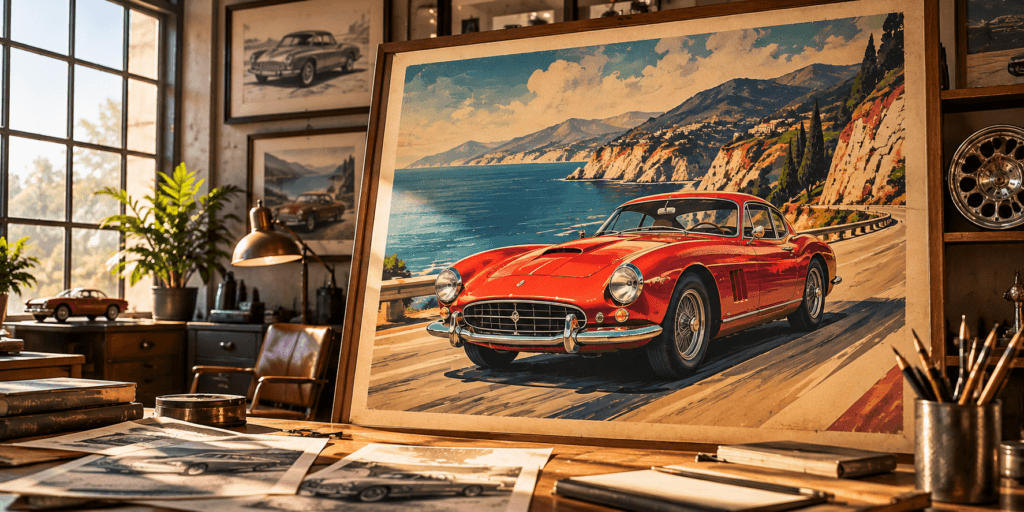
Long before social media campaigns, digital advertising, and highly produced automotive videos, car manufacturers had another powerful way to capture attention: the illustrated automobile advertisement. During the early and middle decades of the twentieth century, automotive advertising became a distinctive form of commercial art, combining beautifully drawn vehicles with dramatic landscapes, elegant typography, aspirational lifestyles, and carefully constructed ideas about freedom.
These advertisements were designed to sell automobiles, but many eventually became much more than sales material. Their illustrations captured the design language of their era and helped establish how people imagined the automobile. Today, vintage automotive advertising art remains fascinating to collectors, designers, historians, and car enthusiasts because it combines automotive history with graphic design and visual storytelling.
The Smithsonian Institution’s collections demonstrate just how extensive the historical relationship between automobiles and advertising became. Its automotive advertising holdings include printed advertisements, postcards, photographs, posters, and other materials documenting the automobile industry’s visual culture. Explore the Smithsonian’s automobile advertising collections.
When Cars Became Advertising Icons
 As automobiles became increasingly important to everyday life, manufacturers needed new ways to distinguish their products. Advertising provided an opportunity to do more than describe a vehicle’s mechanical features. It allowed companies to sell an idea about what owning the automobile could mean.
An advertisement could place a car on an open highway, beside an elegant hotel, outside a modern home, or traveling through a dramatic landscape. The vehicle became part of a larger story about independence, sophistication, adventure, family life, or progress.
This approach helped transform automobiles into lifestyle symbols. Instead of simply asking what an automobile could do, advertising encouraged consumers to imagine where the automobile could take them and what kind of life might accompany ownership.
The Automobile As A Symbol Of Freedom
Freedom became one of the most persistent themes in automotive advertising. Open roads and expansive landscapes gave advertisers an opportunity to associate automobiles with exploration and independence.
Artists could exaggerate this idea through composition. A small car placed against a huge landscape could communicate possibility. A vehicle traveling toward the horizon could suggest adventure. A beautifully dressed family standing beside a new automobile could communicate comfort and prosperity.
These visual strategies were effective because they connected a physical product with an emotional experience. The automobile was no longer just transportation. It represented movement and opportunity.
Why Illustration Was So Important
Photography eventually became a major part of automotive advertising, but illustration offered advantages that photography could not always provide. An artist could create an idealized vehicle, perfect the lighting, remove unwanted distractions, and construct an environment specifically around the automobile.
Illustration also allowed advertisers to emphasize design features. A long hood could be made even more dramatic. Chrome could be rendered with brilliant highlights. A vehicle could be shown at an angle that emphasized its proportions.
This creative freedom made automotive advertising illustration closely related to automotive art. The artist was not simply recording an automobile. The artist was interpreting it.
Creating A Perfect Automobile
Advertising illustrations frequently presented vehicles in pristine condition. The paint appeared flawless, chrome surfaces gleamed, tires looked perfect, and the surrounding landscape appeared carefully composed.
This was intentional. Advertising was about aspiration. The automobile needed to look desirable and almost ideal.
The contrast between a real automobile and its illustrated representation is one reason vintage advertisements are so interesting today. The artwork shows not necessarily what the vehicle looked like in every situation, but how manufacturers wanted consumers to imagine it.
The Artist Behind the Automobile Advertisement
Creating an automotive advertisement required more than simply drawing a car. Commercial artists needed to understand perspective, proportion, typography, composition, color, and the expectations of the target audience.
The automobile itself had to remain recognizable while fitting naturally into the larger composition. Artists needed to make sure the vehicle looked convincing from the chosen angle and that important design features remained visible.
From Rough Concept To Finished Illustration
The creative process could begin with rough sketches. Artists might explore several vehicle positions before deciding on the strongest composition. They could experiment with different backgrounds, lighting conditions, perspectives, and supporting characters.
Once the composition was established, the final illustration could be developed using drawing materials, paint, airbrush techniques, ink, and other commercial art methods.
This process shares an interesting connection with the automotive design sketches discussed in our article about automotive design sketches. In both cases, drawing serves as a way to explore and communicate ideas before the viewer sees a finished result.
Typography Helped Sell The Automobile
The vehicle illustration was only one part of a successful advertisement. Typography played an equally important role.
Large headlines, elegant scripts, bold model names, and carefully positioned supporting text helped establish the character of the advertisement. A luxury vehicle might be paired with sophisticated lettering, while a performance-oriented automobile could use stronger and more energetic typography.
This relationship between lettering and automobile identity is explored further in The Art of Automotive Typography. Just as a vehicle’s badge can communicate personality, advertising typography helped establish the personality manufacturers wanted their automobiles to have.
Color Was Part Of The Sales Strategy
Color could dramatically influence the appearance of an automotive advertisement. Bright reds, deep blues, polished silvers, cream tones, and warm earth colors could create different emotional associations.
The artist also had control over the surrounding environment. A bright blue automobile could be placed against a warm sunset. A dark luxury car could be shown against an elegant architectural setting. A family automobile could be surrounded by green countryside.
These choices helped establish a visual mood before the viewer even read the advertisement.
The Golden Age Of Automobile Advertising
The middle decades of the twentieth century produced some of the most memorable examples of automotive advertising art. Automobile manufacturers were competing not only on mechanical specifications but also on styling, comfort, status, and design.
The result was an enormous variety of visual approaches. Some advertisements emphasized futuristic technology. Others celebrated elegance and craftsmanship. Some focused on family life, while others promoted performance and adventure.
The Henry Ford’s historical collection provides an excellent look at how automotive promotion evolved. Its collection of auto-show programs and posters spans more than a century and demonstrates how manufacturers used visual presentation to generate excitement around new vehicles. Explore The Henry Ford’s history of automotive show posters and programs.
Advertising Reflected The Culture Of Its Time
Automotive advertising was also a reflection of society. The homes, clothing, architecture, roads, landscapes, and family scenes included in advertisements can reveal how manufacturers imagined their customers.
This makes vintage automotive advertisements useful historical objects. They provide clues about changing ideas of modernity, mobility, consumer culture, and design.
The Smithsonian’s “Selling the Dream” collection specifically examines the history of advertising and how advertising both influences and reflects American culture. The collection also includes material connected to automobile advertising campaigns. Explore the Smithsonian’s Selling the Dream collection.
Why Vintage Automotive Posters Still Look Modern
Many vintage automotive advertisements continue to influence modern graphic design because their compositions are remarkably strong. A well-designed poster may use only a few major elements: a vehicle, a dramatic background, a headline, and carefully balanced colors.
The simplicity of these compositions allows the automobile to remain the focal point. Modern artists can study these arrangements when creating automotive prints, posters, and illustrations.
The visual language of vintage advertising also works well with contemporary interiors. A classic automotive advertisement can add personality to a garage, office, studio, workshop, or collector room without requiring the space to become overly themed.
Vintage Style Without Reproducing An Original Advertisement
Artists today can draw inspiration from historic automotive advertising without simply copying an original advertisement. Period-inspired artwork can borrow composition, color relationships, illustration techniques, and typography while creating an entirely new scene.
This allows contemporary automotive artists to combine nostalgia with originality. A modern illustration might use the visual language of a 1950s advertisement while depicting a classic automobile in a newly imagined environment.
Automotive Advertising Art As Collectible Design
 Vintage automotive advertising has also become attractive to collectors because it sits between commercial history and fine art. Collectors may appreciate an advertisement because of the automobile depicted, the artist’s technique, the historical period, or the graphic design.
Some people collect original vintage advertisements, while others prefer high-quality reproductions and contemporary automotive artwork inspired by historic advertising.
This type of artwork can also complement a broader automotive collection. A collector who already owns classic car paintings or photographs might add vintage advertising-inspired pieces to introduce a different visual language.
For readers building an automotive art collection, our guide on starting an automotive art collection on a budget offers another useful perspective on selecting pieces around a particular interest.
Why Advertising Art Works In A Garage
Automotive advertising posters have a natural relationship with garages and workshops. Their original purpose was to celebrate automobiles, so their imagery fits naturally into spaces dedicated to cars.
A single large poster can become a focal point, while several smaller advertisements can create a chronological display showing how automotive design changed over time.
Collectors can also combine advertising-inspired artwork with other pieces. A classic vehicle painting can sit alongside a vintage-style advertisement, while automotive photography can provide another visual perspective.
The Transition From Print To Digital Advertising
The rise of digital media changed automotive advertising dramatically. Manufacturers can now produce interactive websites, social media campaigns, videos, virtual experiences, and highly detailed digital imagery.
Yet many modern automotive advertisements still use principles established by earlier commercial artists. The automobile remains carefully positioned. Lighting creates emotion. Color establishes mood. Typography communicates identity. The surrounding environment tells the viewer what kind of experience the vehicle represents.
The technology has changed, but many of the fundamental principles remain surprisingly familiar.
What Modern Automotive Artists Can Learn From Vintage Ads
Vintage advertising offers several lessons for today’s automotive artists. First, strong composition is often more important than excessive detail. A clear visual hierarchy helps the viewer understand the image immediately.
Second, the environment should support the vehicle rather than compete with it. A dramatic background can make an automobile more interesting when it reinforces the intended mood.
Finally, consistency matters. Color, typography, vehicle positioning, and surrounding elements should work together rather than appear to have been selected independently.
The Legacy Of Automotive Advertising Art
Automotive advertising helped establish many of the visual ideas that continue to influence car culture. It taught generations of viewers to associate automobiles with freedom, style, adventure, technology, luxury, and personal identity.
It also created a body of commercial artwork that is now appreciated for reasons beyond its original purpose. A poster created to sell a car can eventually become a historical document, a graphic design reference, or a collectible piece of automotive culture.
That transformation is part of what makes automotive advertising art so fascinating. Its original goal was commercial, but its lasting influence is cultural and artistic.
Final Thoughts
The golden age of automotive advertising produced some of the most distinctive visual representations of automobiles ever created. Artists transformed cars into symbols of freedom, progress, elegance, adventure, and aspiration.
These advertisements were carefully constructed compositions in which the vehicle, typography, color, environment, and message worked together. They helped consumers imagine not only the automobile they might purchase but also the lifestyle associated with it.
Today, vintage automotive advertising art remains relevant because the design principles behind it continue to work. Strong compositions, memorable colors, distinctive lettering, and carefully presented vehicles can still capture attention.
For automotive enthusiasts, these posters provide another way to appreciate the history of car design. For artists, they offer an enormous source of inspiration. And for collectors, they represent a fascinating intersection of automobiles, graphic design, advertising, and culture.
Ultimately, the greatest automotive advertisements did more than sell cars. They sold a vision of the road ahead — and that vision continues to influence automotive art today.
For another look at how automobiles become visual stories, explore The Art of Automotive Photography and see how photographers use composition, lighting, and perspective to create memorable automotive imagery.